The week the open web won

Musings
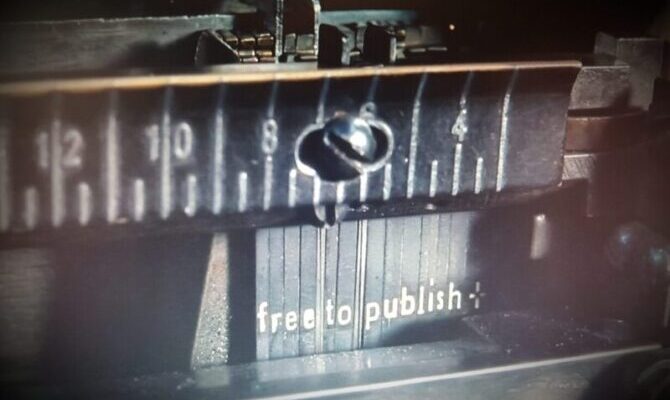
A still frame from the film "The Post" showing an old printing press, loaded with type blocks which say "free to publish"

There are many things that I would like to say to you about the past 48 hours in UK politics, days which saw the Online Safety Bill abruptly kicked into the long grass, possibly never to return. I am already working on a post offering my constructive ideas on how the Bill can and should be improved, for if it and when it comes back, in whatever form.

But I’m taking my time with it to get it right. So today I want to get personal.

Read More

Here’s why your project is in scope of the Online Safety Bill

UK policy

A quick follow-up to this week’s magnum opus. Many of you who read that post, as well as the one which preceded it, will be wondering why your work falls into the scope of the Online Safety Bill’s likely compliance requirements. After all, you’re just you, and your team, doing your thing. You’re not a social media site, you’re not a major platform, you’re not doing anything wrong, and you’re not hurting anyone.

So why are you being treated like you are, and why are you facing compliance burdens and costs which punish you for the sins of others?

Read More

Your compliance obligations under the UK’s Online Safety Bill; or, welcome to hell

UK policy
Parliament, 13 June 2022. It was actually a beautiful day but I'm loyal to the black and white aesthetic

Last month I wrote a post about the UK’s “world-leading” vision for age-gating the open web. It got a bit of attention. That post, sadly, encompassed only one aspect of your compliance obligations under the Online Safety Bill. In this post, I’m going to tell you about the rest.

I apologise in advance.

Author’s note: this post was written in July 2022, before the Online Safety Act became law. It is now law, and this post is therefore outdated, and you should not be using it as a definitive reference. The law that is in force now bears very little resemblance this post, which detailed a draft iteration, and which I left up for archival purposes only. I frankly have no idea why any of you are reading this post, other than perhaps having outsourced your brains to AI laziness, but suffice to say that if any of you reading this post interprets it as either either gospel or law, you are an idiot.

Read More

Pop-ups are dead, long live pop-ups: or, the bait-and-switch hidden in today’s cookie announcement

Privacy / UK policy
Crumbled UK flag biscuits

Today is going to be the day that you read a lot about the UK’s intention to kill cookie pop-ups as part of its post-Brexit Data Reform Bill. By now you should have somehow realised that there’s a bit more to it than that, and that your work is not set to get any easier.

So settle in for 3,000 words or so explaining what’s ahead for you, and the way you build things, here in the sunlit uplands. Read More

When it comes to your privacy, the UK has decided that you’re a bunch of c-words

Privacy / UK policy
Glasgow city centre as a film set, July 2021

We’ve known for a long time that the UK’s post-European digital strategy wasn’t going to place privacy front and centre. Whether the vision has been negative and spiteful (e.g. anti-Europe) or constructive and aspirational (e.g. pro-business), depending on which Spinal Tap drummer Minister for Digital was holding the brief, it hasn’t been a question of whether our privacy rights were on the chopping block. It’s been a matter of when and how we’re set to lose them.

Today, we’ve had sight of where the UK government intends to take us; more to the point, we’ve had sight of exactly what it is they think of you. Read More

Yes, the UK is trying to Brexit the Internet

UK policy

In response to this week’s fun and games in British digital regulation, one of my Twitter followers – a wordsmith by trade – made a very astute observation:

He’s not wrong. What we are up against now is, indeed, an attempt by the sitting UK government to Brexit the Internet. Read More

A quick take on three pretty terrifying changes to the Online Safety Bill

UK policy
Photo of a barbed wire fence © Tomas Castelazo, www.tomascastelazo.com / Wikimedia Commons

Yesterday the second draft of the Online Safety Bill was released, along with several hundreds of pages of explanatory notes and memoranda. It’s well over 500 pages of legalese to sift through, and I’ve not finished it all yet, and the analysis I’m doing for my work team (hi guys!) takes first priority.

That being said, I wanted to jot down some quick takes on three aspects of the Bill which you need to know, in the sense that you will not be able to sleep tonight once you know them. Read More

A peek behind a dark curtain

UK policy
An empty 1920s theatre, from the view of the stage

A funny thing happened during my recent spell between jobs. As with anyone on a job search, I received a few offers which weren’t quite on the level. None of them merited any interest from me, much less the courtesy of a response; no jobseeker is under any obligation to respond to timewasters. But there was one bizarre offer which did serve a purpose: it gave me a peek into a dark room. Read More

Why the “Nick Clegg Law” is saying the quiet part out loud

UK policy
A locked hiding place I spotted hidden in a forest. I wonder who has the key.

The UK’s post-Brexit online regulation debate is a war of words. To make the UK the “safest place in the world to be online” – or is that safer? – the tone, intention, nuance, and subtlety of what we are saying, and who we are saying it to, is as much on the table as the content of what we say itself.

But that works two ways. What government says about its legislative programme is as much about its tone, intention, nuance, and subtlety, as the content of the draft regulations themselves.

And that’s why a recent change in the messaging which government is using to discuss its draft Online Safety Bill is the most terrifying development I’ve seen in the three years I’ve been dealing with it. Read More

The #WildWestWeb fallacy isn’t about ending online harms. It’s about enabling populism.

UK policy

I‘ve spoken with you in the past, dear readers, about the “wild west web” fallacy: the trope which holds that the Internet is the land of the lawless where anything goes and no-one is safe. The trope implies that we are all helpless villagers at the mercy of the bad guys, if we’re not the bad guys ourselves. And the trope implies that we helpless villagers need a swashbuckling sheriff to ride into town and save the day.

We’ve also spoken about how that’s all a load of shite. Read More