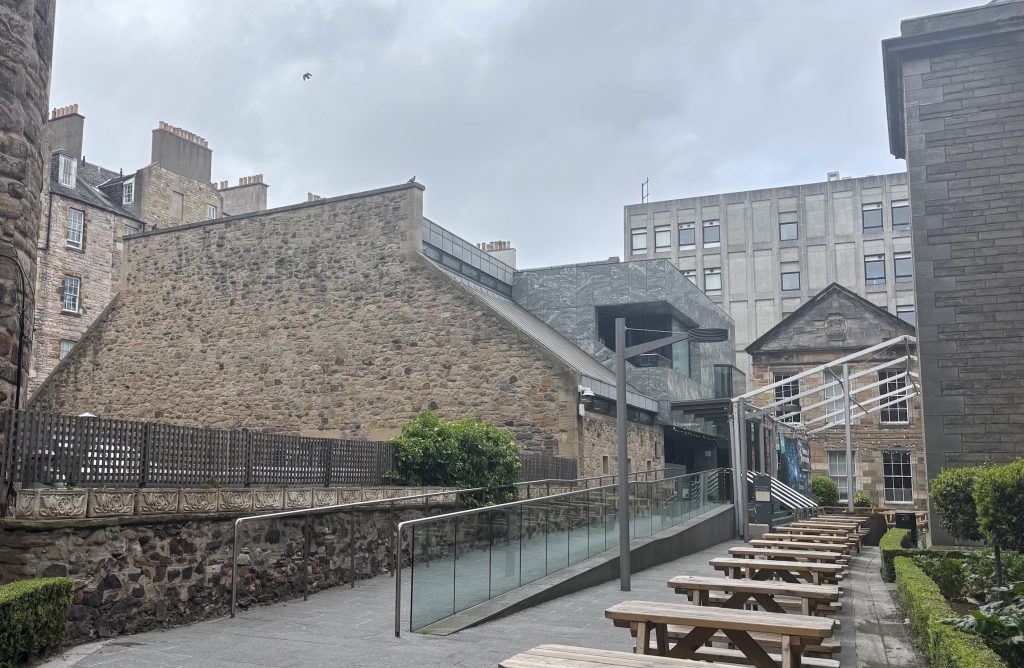
Last week I had the pleasure of attending a symposium at the University of Edinburgh on “Rewilding the Web: Diversity & Resilience in Sociotechnical Infrastructure”.
As the description went:
The internet has become a monoculture. This interdisciplinary workshop will host discussion of how we can rewild our digital lives.
Inspired by visions of nature as an ecosystem of self-regulating feedback loops, the 20th-century architects of the internet proposed that a perfectly interconnected world would allow free individuals to spontaneously self-organise into harmonious networks of exchange, without any need for top-down control.
Fifty years later, the internet is a monoculture. Google accounts for 84% of all search queries, while 50% of cloud computing is provided by Amazon and Microsoft alone. Accordingly, technologists are increasingly calling for a ‘rewilding’ via the decentralisation of core services, in order to restore the cybernetic vision of a harmonious digital ecology. Yet if decentralisation alone were sufficient to ensure a flourishing ecosystem, then how could these tech monopolies have arisen in the first place? For the re-wilding of internet infrastructure to succeed, it must move beyond an outdated view of biological systems, which abstracts from the inherent mutability and precarity of organisms to treat them as no more than complex machines seeking a stable equilibrium. Fortunately, other philosophies of nature are available.
This workshop brings together technologists, ecologists, philosophers and cultural theorists to discuss how contemporary insights from theoretical biology and ecology can provide a richer understanding of what makes for a thriving biosphere, and how this might provide inspiration for cultivating sociotechnical infrastructure that is more resilient against co-option by monopolising tendencies.
And the conference was … absolutely what it promised. You don’t get many conferences which put technologists, internet governance specialists, biologists, computer scientists, and sci-fi authors in one room, but when it does happen, it is the room you want to be in.
Edinburgh being stressful enough for Glaswegians, I chose to go laptop-free and took analogue notes, but another speaker/participant took incredible laptop notes. You can find their notes here. I highly encourage everyone to dive in and engage with all of the speakers’ work, which – in the tradition of the best conferences in Edinburgh – was made with genuine love.
That may sound like a strange way to describe what was, to an onlooker, a dry academic symposium, but unfortunately there is a side story here.
This Edinburgh conference was devised in cooperation with Maria Farrell and Robin Berjon, who originated the internet rewilding concept in their seminal 2024 article in Noema Magazine. Which you absolutely must read.
(My god it was good to see them both IRL! Many hugs were hugged.)
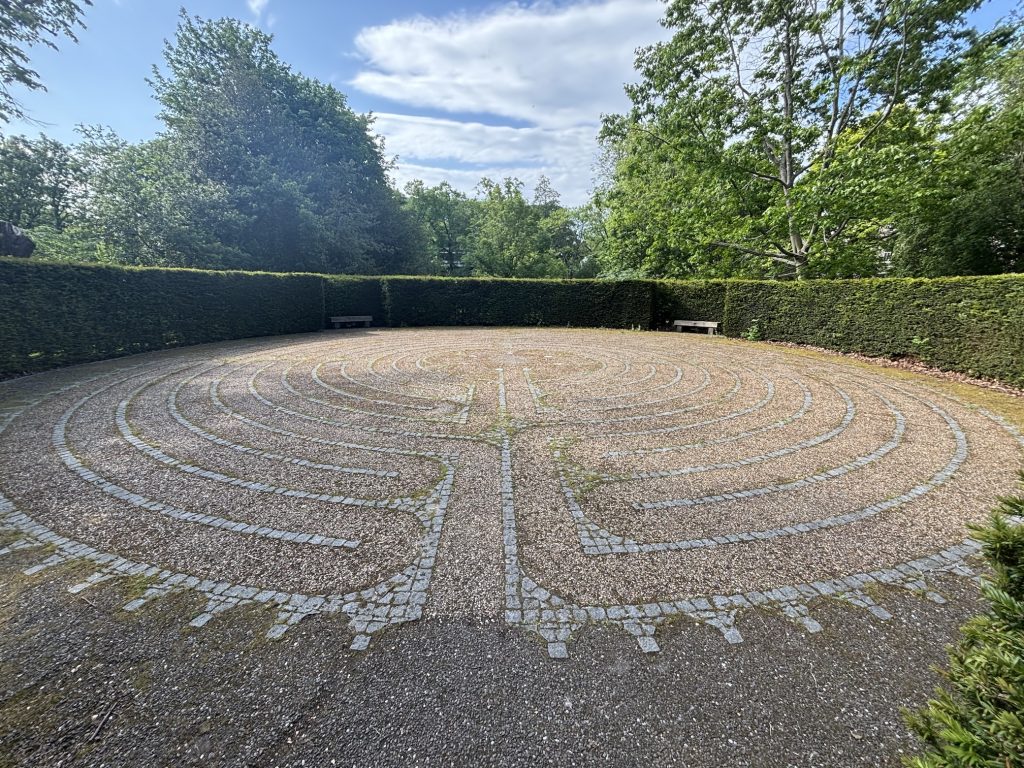
Both of them are, like me, freelancers not by choice; it’s because we have chosen to walk a path that’s far more difficult than the default options in tech. That means we’re not very popular, and we’re all quite poor. But that is the path where we’re meant to be, as wonderfully symbolised by the labyrinth just across from the conference venue.
Which is why I stand in full solidarity with them as regards Mozilla’s appalling theft of their rewilding idea as both their idea and as the theme for this year’s no-expenses-spared Mozfest global conference.
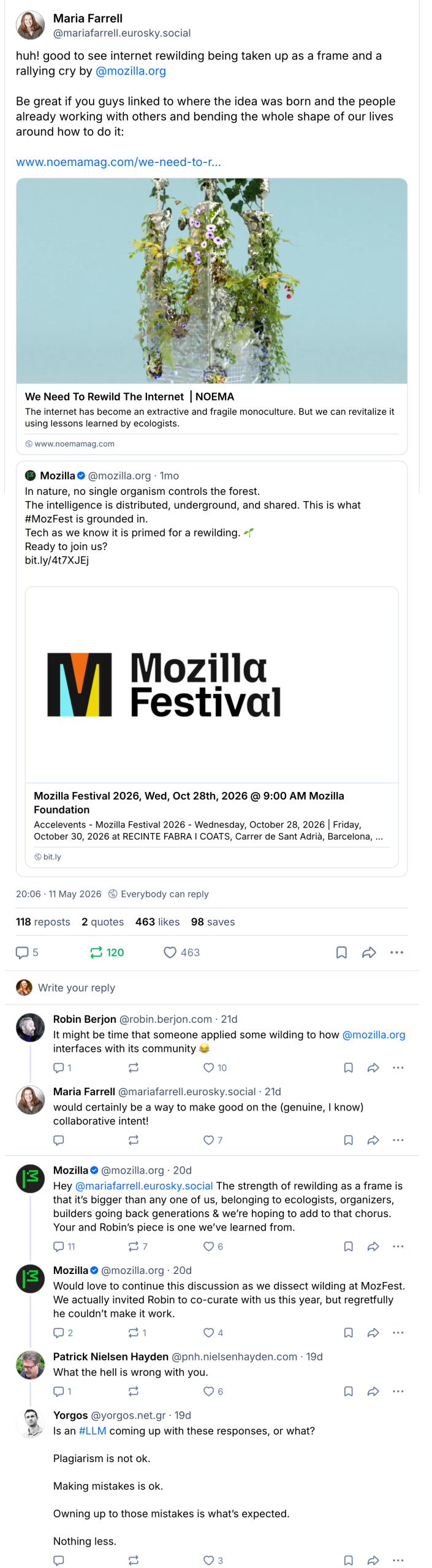
Apparently the well-funded American corporate behemoth offered a token insult for one of them on the road to their annual European colonial jolly.
I do a *lot* of pro bono and reduced-rate work for projects I support, but if I’m going to commit to a multi-week engagement at $20/h (which is really pushing it in the best of cases) then I’ll prioritise entities that can’t actually afford to pay people.
bsky.app/profile/mozi…— Robin Berjon (@robin.berjon.com) 13 May 2026 at 08:07
Plus ça change, plus c’est la même chose.
This work we do is hard. Sometimes it’s harder than it needs to be. A part of that work is accepting that you will live on or below the poverty line to do that work, and that from time to time, that work will be appropriated by corporate smilers on six-figure salaries who would spend your income putting on a single one-day meeting, charged to expenses, without a second thought. What are corporate KPIs to impress a VIP funder, to them, is what gets someone else out of bed in the morning.
And that’s how Mozfest will repeat the mistakes of the past while claiming to have the solutions for the future. They already have.
Rewilding begins at the grassroots. Make sure you choose the real grass. Not the astroturf.
As a coda, and this is something which only a few of you will understand: to get to the symposium, I had to walk past this venue where I did a spot of conference speaking in 2012. It’s not the first time since then that I’ve had to go by, but to wander past with my mind on ecological metaphors of growth, decay, death, and rebirth, in the context of the internet we’ve built so far and the internet we could build in the future, was … well.
If you know, you know. And if you were there, you were there.